Inflammation results from cell damage or the breach of immune barriers by pathogens and is generally classified into two types. The first, acute inflammation, is initiated by histamine release from mast cells; this process induces vasodilation and increases vascular permeability, thereby leading to characteristic symptoms such as redness, swelling, warmth, pain, and dysfunction, while simultaneously promoting the recruitment of phagocytes to the affected area. In contrast, chronic inflammation represents a persistent, low-level response that arises from the incomplete clearance of pathogens.
In this context, inflammatory mechanisms are central to the pathogenesis of endometriosis, as they contribute to tissue proliferation, adhesion formation, and immune dysregulation within the pelvic cavity. As highlighted in the 2024 article “Endometriosis: A Comprehensive Exploration of Inflammatory Mechanisms and Fertility Implications,” inflammation plays a pivotal role in both the development and progression of endometriosis, significantly influencing the severity of symptoms and associated complications.
What we need are long-lasting solutions.
DAILY ROUTINES
In addition to medical interventions and therapeutic approaches, attention to dietary habits can contribute to the management of this process. In this regard, the consumption of fruits and vegetables with anti-inflammatory properties is of considerable importance, as it may help alleviate symptoms.
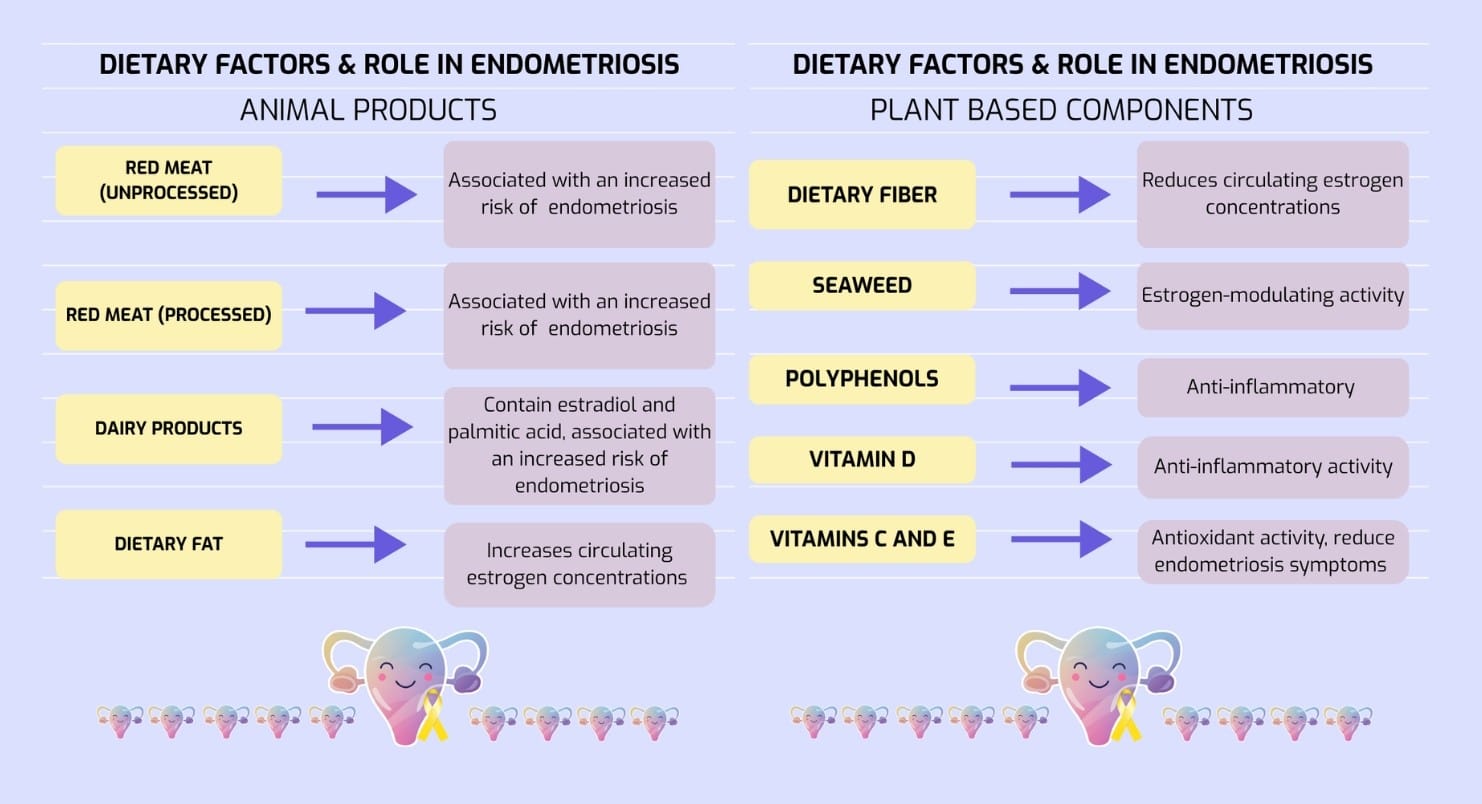
Foods such as blueberries, spinach, broccoli, and cabbage, together with sources of healthy fats including olive oil, avocado, walnuts, and flaxseeds, may be effective in reducing inflammation. In particular, omega-3 fatty acids have been shown to inhibit leukocyte chemotaxis, reduce the expression of adhesion molecules and interactions between leukocytes and endothelial cells, decrease the generation of eicosanoids derived from omega-6 fatty acids (e.g., arachidonic acid), and suppress inflammatory cytokine synthesis as well as T-cell reactivity (Philip C. Calder, 2013).
Furthermore, grains such as oats and quinoa, along with fish oil supplements, are also recognized for their anti-inflammatory properties and their potential to reduce inflammation. Similarly, turmeric and ginger have been reported to modulate inflammatory pathways, reduce proinflammatory cytokines, and exert antioxidant activities, thereby demonstrating strong anti-inflammatory effects (T. A. Jiang, 2019).
Conversely, sugar, processed foods, fried foods, and refined carbohydrates are among the dietary components that should be avoided. Taken together, this overview highlights the capacity of anti-inflammatory constituents in foods to mitigate endometriosis.
What About Bloating?
According to the published article “Gut Microbiota and Endometriosis: Exploring the Relationship and Therapeutic Implications” (2023), the intestinal microflora provide a strong defense against intestinal pathogens; however, they may be altered under inflammatory conditions affecting the gut, such as endometriosis.
In this context, understanding which nutrients are most effectively metabolized by the body can contribute to a more efficient alleviation of inflammation-related symptoms. For instance, although fiber plays a crucial role in supporting the proper functioning of the digestive system, excessive intake may lead to constipation and bloating, which can exacerbate symptoms depending on the location of endometriosis.
Furthermore, the adequate consumption of probiotics supported with prebiotics (fibers), aimed at maintaining a balanced gut microbiota, may help reduce pain associated with bloating.
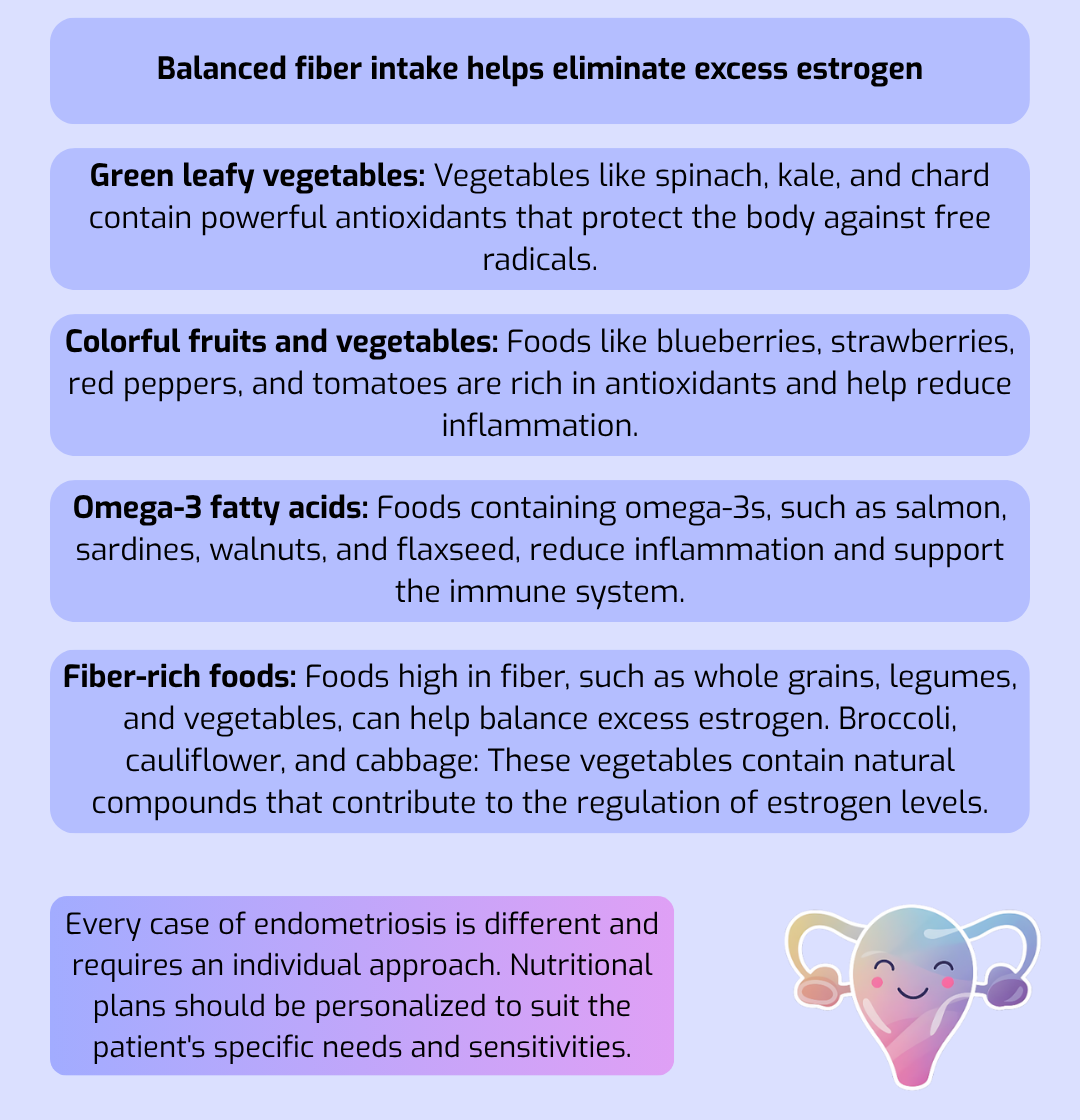
This article has been prepared for informational purposes only and should not be regarded as individualized medical advice. To ensure clinical safety and efficacy, a personalized nutrition plan should be developed in consultation with a qualified healthcare professional.
References & To Learn More
- Rathod S, Shanoo A, Acharya N. Endometriosis: A Comprehensive Exploration of Inflammatory Mechanisms and Fertility Implications. Cureus. 2024 Aug 4;16(8):e66128. doi: 10.7759/cureus.66128. PMID: 39229427; PMCID: PMC11370979.
- Barnard ND, Holtz DN, Schmidt N, Kolipaka S, Hata E, Sutton M, Znayenko-Miller T, Hazen ND, Cobb C, Kahleova H. Nutrition in the prevention and treatment of endometriosis: A review. Front Nutr. 2023 Feb 17;10:1089891. doi: 10.3389/fnut.2023.1089891. PMID: 36875844; PMCID: PMC9983692.
- Xholli A, Cremonini F, Perugi I, Londero AP, Cagnacci A. Gut Microbiota and Endometriosis: Exploring the Relationship and Therapeutic Implications. Pharmaceuticals (Basel). 2023 Dec 7;16(12):1696. doi: 10.3390/ph16121696. PMID: 38139822; PMCID: PMC10747908.
- Huang Y, Liang F, Wei Y, Huang J, Luo X, Xie B. Unveiling the correlation between dietary fiber intake and endometriosis: a cross-sectional analysis of NHANES data. Sci Rep. 2025 Mar 17;15(1):9202. doi: 10.1038/s41598-025-92978-7. PMID: 40097542; PMCID: PMC11914676.
- Yu X, Pu H, Voss M. Overview of anti-inflammatory diets and their promising effects on non-communicable diseases. Br J Nutr. 2024 Oct 14;132(7):898-918. doi: 10.1017/S0007114524001405. Epub 2024 Oct 16. PMID: 39411832; PMCID: PMC11576095.
- Simmen RCM, Kelley AS. Seeing red: diet and endometriosis risk. Ann Transl Med. 2018 Dec;6(Suppl 2):S119. doi: 10.21037/atm.2018.12.14. PMID: 30740440; PMCID: PMC6330594.
- Yamamoto A, Harris HR, Vitonis AF, Chavarro JE, Missmer SA. A prospective cohort study of meat and fish consumption and endometriosis risk. Am J Obstet Gynecol. 2018 Aug;219(2):178.e1-178.e10. doi: 10.1016/j.ajog.2018.05.034. Epub 2018 Jun 2. PMID: 29870739; PMCID: PMC6066416.
- Bailey MT, Coe CL. Endometriosis is associated with an altered profile of intestinal microflora in female rhesus monkeys. Hum Reprod. 2002 Jul;17(7):1704-8. doi: 10.1093/humrep/17.7.1704. PMID: 12093827.
- Norfuad FA, Mokhtar MH, Nur Azurah AG. Beneficial Effects of Probiotics on Benign Gynaecological Disorders: A Review. Nutrients. 2023 Jun 13;15(12):2733. doi: 10.3390/nu15122733. PMID: 37375637; PMCID: PMC10301998.
- Calder, P.C. (2013), Omega-3 fatty acids and inflammation. Br J Clin Pharmacol, 75: 645-662. https://doi.org/10.1111/j.1365-2125.2012.04374.x
- Donnez J, Cacciottola L. Endometriosis: An Inflammatory Disease That Requires New Therapeutic Options. Int J Mol Sci. 2022 Jan 28;23(3):1518. doi: 10.3390/ijms23031518. PMID: 35163463; PMCID: PMC8836207.
- Calder PC, Albers R, Antoine JM, Blum S, Bourdet-Sicard R, Ferns GA, Folkerts G, Friedmann PS, Frost GS, Guarner F, Løvik M, Macfarlane S, Meyer PD, M'Rabet L, Serafini M, van Eden W, van Loo J, Vas Dias W, Vidry S, Winklhofer-Roob BM, Zhao J. Inflammatory disease processes and interactions with nutrition. Br J Nutr. 2009 May;101 Suppl 1:S1-45. doi: 10.1017/S0007114509377867. PMID: 19586558.
- Jiang TA. Health Benefits of Culinary Herbs and Spices. J AOAC Int. 2019 Mar 1;102(2):395-411. doi: 10.5740/jaoacint.18-0418. Epub 2019 Jan 16. PMID: 30651162.